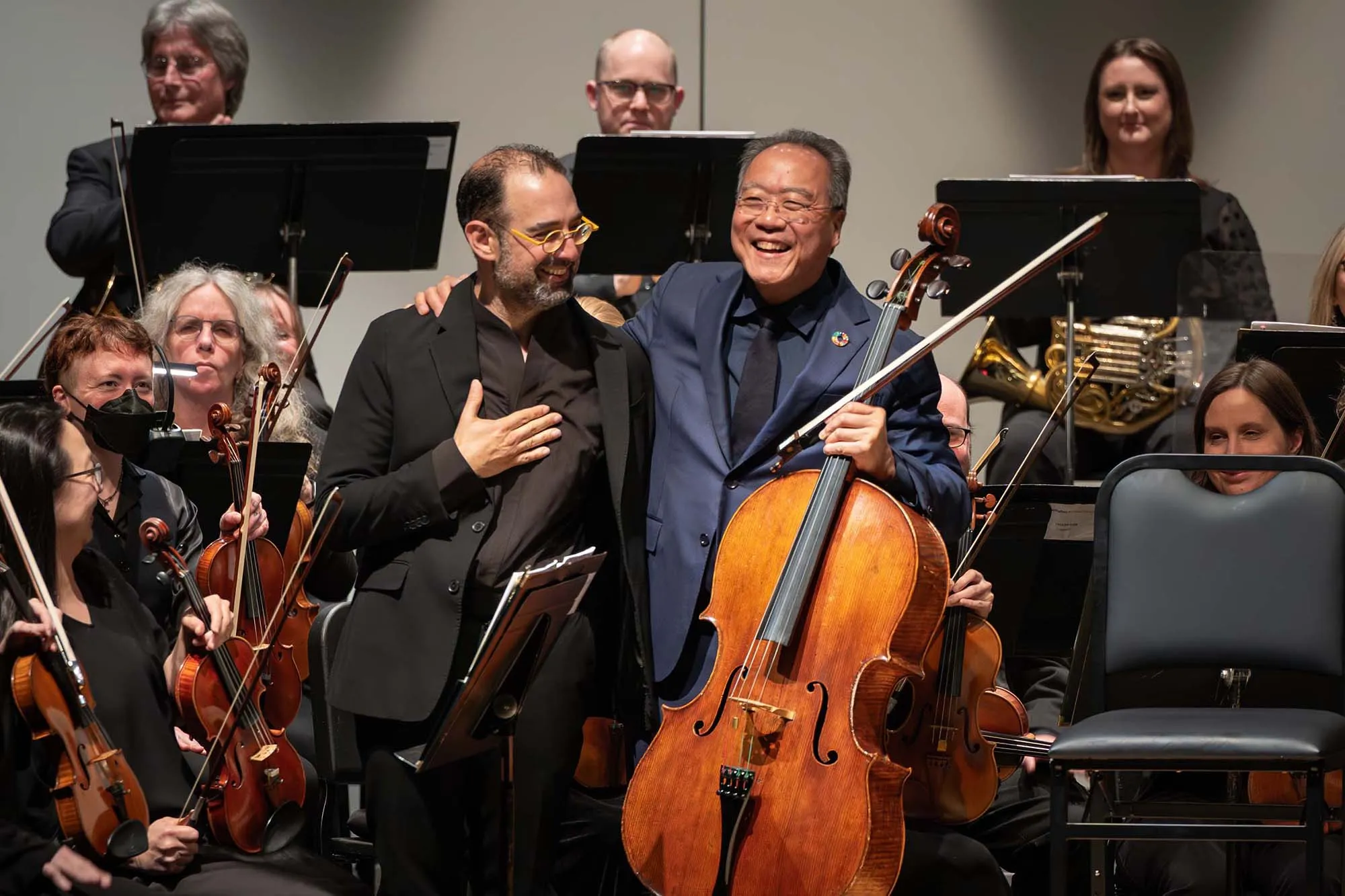
Published in the Seattle Times on May 14, 2026
On a Friday night in October 2024, Gail Ridenour made a decision that would reshape what seemed possible for a small, community-based orchestra.
The Bellingham Symphony Orchestra was approaching its 50th anniversary season. Programming was already set: ambitious, thoughtful and locally resonant. But something didn’t sit quite right with the executive director.
“I started to feel like we were missing an opportunity,” Ridenour says. “I called Yaniv and said, ‘I don’t think we’re dreaming big enough. What if we get Yo-Yo Ma?’”
On the other end of the line, Music Director Yaniv Attar laughed.
“I thought she was out of her mind — literally,” Attar says. “I knew how hard it is to get arguably the most celebrated living classical musician today. The waitlist is years long. I thought she was chasing a ghost.”
That “ghost,” of course, was Yo-Yo Ma — a global icon whose schedule is booked years in advance and who often performs on the world’s largest stages.
But Ridenour persisted.
She began calling colleagues at major orchestras. Those conversations revealed something surprising: bringing an artist of Ma’s caliber wasn’t impossible. It simply required a shift in mindset.
“We needed to think like a big orchestra,” she says. “Why not us?”
Instead of relying on a single major donor, Ridenour built a financial model rooted in community participation. If structured carefully, the concert could function as both a once-in-a-lifetime artistic experience for the musicians and community, as well as being the orchestra’s most significant fundraiser.
Then came the letter.
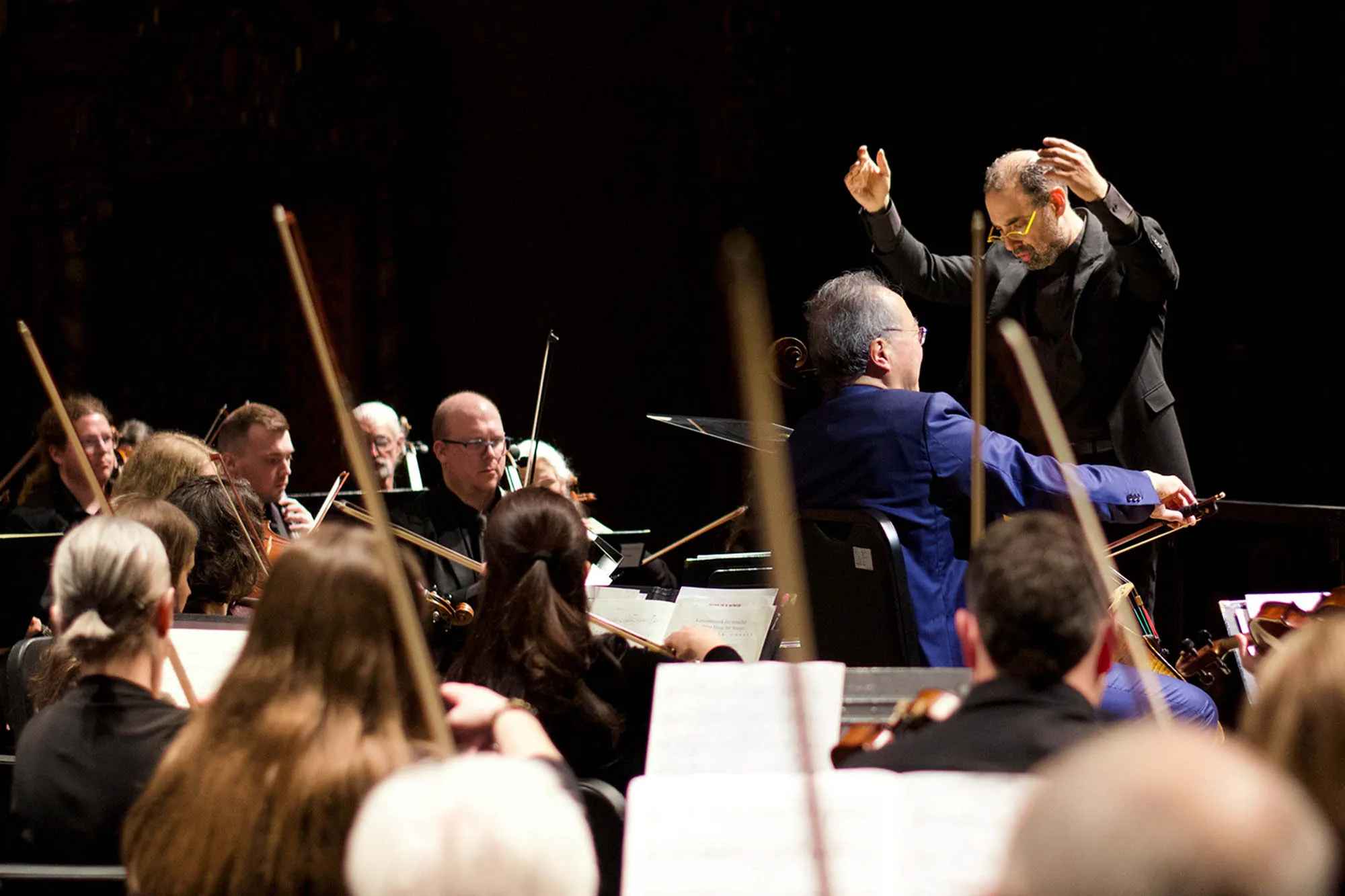
Knowing a standard booking request would disappear among possibly hundreds of others, Ridenour crafted a deeply personal appeal to Ma’s representatives. She highlighted the orchestra’s decade-long “Harmony from Discord” series — programming that uplifts composers whose music has endured through oppression — and drew connections to Ma’s own work, including his role with the Silk Road Ensemble.
“It had to stand out,” she says. “We’re not one of the big orchestras, but we have something really special here.”
The offer was sent Oct. 15, 2024.
Within a week, a reply arrived: Ma was interested. Ridenour received the news via email during a rehearsal. She immediately texted Attar, who was leading the orchestra from his podium 30 feet away.
“I wanted to see his reaction to the news,” she says, smiling at the memory. “He played it so cool.”
“I glanced at it and just turned the phone over and kept conducting,” Attar says, laughing. “But afterward, we had a moment. It was disbelief. Excitement. Everything at once.”
For Attar, the significance is deeply personal. Years earlier, as an assistant conductor in Alabama, he watched Ma rehearse, then spend half an hour jamming with elementary school students — before letting them try his priceless cello.
“That’s how generous he is,” Attar says. “Inspirational beyond anything I’ve witnessed.”
Now, that same spirit has come to Bellingham.
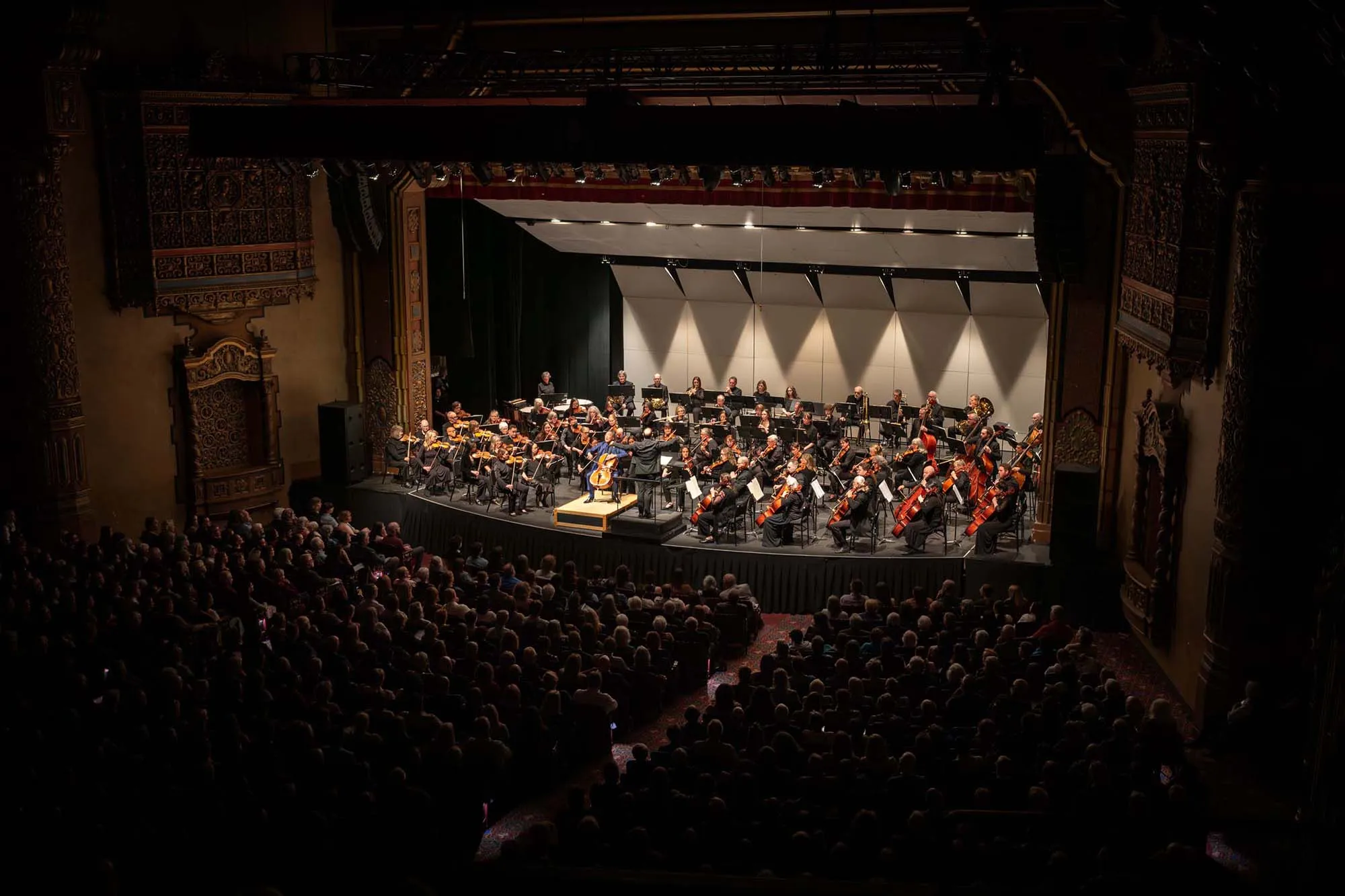
“It was exciting and terrifying,” Attar admits. “We wanted to make sure the orchestra was prepared. We knew that if we gave him what he needed — he would explode the roof with beauty, energy and excitement.”
For Ridenour, the story is bigger than a single performance.
Every ticket purchased helped make the concert a reality. Every musician, donor and audience member played a role.
“That’s the magic,” she says. “Each person added up to something incredible.”
In a world where major cultural moments are often concentrated in big cities, Bellingham’s Yo-Yo Ma performance offers a different narrative: one where collaboration and belief can transform a seemingly out-of-reach dream into something real.
And perhaps, as Ridenour suggests, something even more lasting.
“This was the idea that collectively we could create something beautiful for our community,” she says. “Not just bringing in a star, but what’s possible when a community comes together.”
Yo-Yo Ma performed with the Bellingham Symphony Orchestra April 26, 2026, at the historic Mount Baker Theatre.


